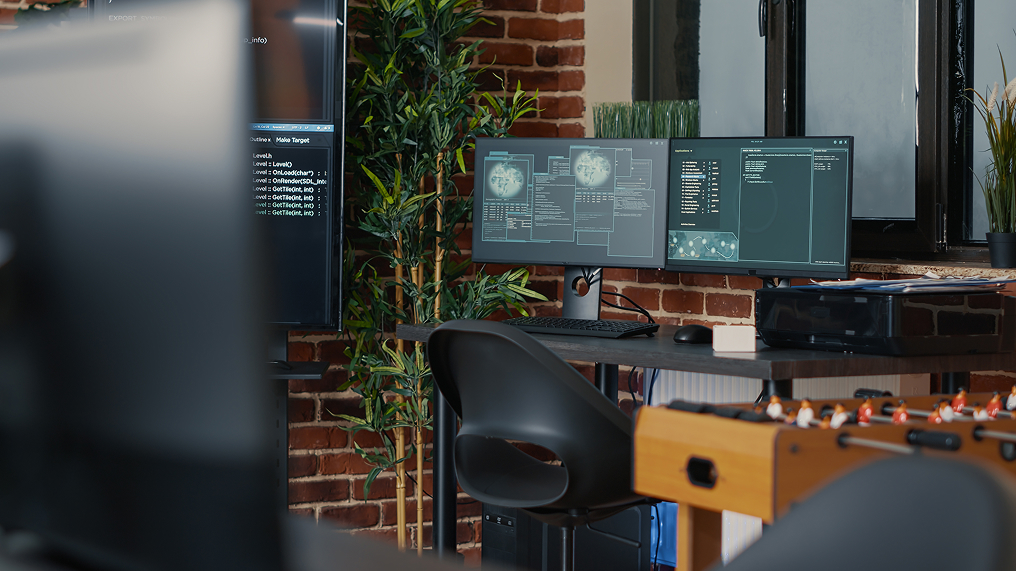
Hybrid Shooting for Commercials: Studio, Chroma Key and AI
How to shoot commercials without expensive locations — and where the catch is.
Hybrid shooting means filming the actors, the product and everything they touch live in a studio, while the environment — a city, a train station, a race track, a seaside villa — is built in post-production from CG, AI generation and photo plates. In 2026–2027 more and more commercials are made this way: it is cheaper, faster and free from weather, permits and logistics.
But hybrid production has a flip side. Anyone can generate a pretty background today. Turning it into a commercial that survives broadcast, a giant screen and a demanding brand manager is a job for a post-production studio. Below we look at why brands are moving into the studio, where the savings come from, where projects break, and how it all looks on our work for inDrive, Sheron Residence × Mads Mikkelsen and Adrenaline Rush.
What hybrid shooting is, in plain words
Classic production takes the crew to where the picture already exists: a station, an airport, the mountains, another city or country. Hybrid production does the opposite — it brings the picture to the crew.
- On set — actors, props, product, lighting, and everything a person physically interacts with: the floor, railings, doors, car seats.
- Behind them — a chroma key (green or blue screen) with tracking markers.
- In post — keying, camera tracking, a CG environment or AI background, cleanup, compositing and color grading that bring it all together in one frame.
LED-wall virtual production is a related technology: there the background is shown on an LED wall during the shoot. For most commercial work, chroma key with compositing afterwards is still more flexible and affordable: the background can be changed and refined after the shoot, right up to final approval.
Why brands are moving to hybrid production in 2026–2027
1. No company moves between locations
One studio day replaces several days of travel. A station, a car interior, a street and an interior are all shot in one place, with one crew and one lighting setup. No need to close a platform, wait for golden hour or reschedule because of rain.
2. Less spent on art department and set building
The classic route to a complex location is to build a set or rent a venue. In a hybrid shoot the art department builds only what the actor touches; the rest of the space continues in CG. That cuts the art budget noticeably, especially when the location is huge or does not physically exist yet.
3. You can shoot what doesn’t exist yet
Real estate before completion, a product before launch, a city of the future, a season that hasn’t come yet — all of it can be shot today, not in six months.
4. Versions for markets and seasons without a reshoot
The same performance can be placed in another city, another time of day or other weather. For brands launching in several countries at once, that is one shoot instead of several.
5. Control and predictability
Studio light doesn’t fade, clouds don’t cover the sun, and passers-by don’t wander into frame. The director gets repeatable takes, and the client gets a film that can be refined in post without bringing the crew back.
| Classic location shoot | Hybrid studio shoot | |
|---|---|---|
| Locations | Travel, rentals, permits | One studio, environment built in post |
| Weather and time of day | Dependent, risk of delays | Full control, day and night in one shift |
| Sets | Built in full | Only what the actor touches |
| Changes after the shoot | Often only a reshoot | Background, time of day and details changed in post |
| Main risk | Logistics and weather | Quality of post-production |
The last row is the key one. Hybrid moves the complexity from the set to post-production. If post is done badly, no amount of location savings will save the film.
inDrive case: a station, a platform and a taxi — in one studio
For the inDrive commercial we had to show characters in bubble-wrap costumes at a train station, on a platform, in a waiting hall and in a taxi. Instead of several locations, every scene was shot in a studio: the station scenes against blue, the car interior against green. The station, the platform and the city outside the car windows were built in post.
The hardest part here was not the background but the characters themselves. Transparent bubble wrap lets the blue screen through and reflects it — every bubble holds a highlight and a bit of chroma. Automatic keying or AI background removal turns that texture into mush. To keep the wrap transparent and alive, with the station readable behind it, you need layered manual keying and careful compositing.
The taxi scenes were shot in a car against green. The city outside was added in post — with reflections in the glass, motion and light that matches what falls on the actors’ faces.
Phone screens are also shot “empty”, with a green fill and markers. The app interface is inserted in post with tracking, glare and finger occlusion, so it can be changed until the last day: prices, copy, language.
Sheron Residence × Mads Mikkelsen: filming a residence that doesn’t exist yet
The task was to show Sheron Residence — a development of about 40 hectares with more than two hundred Italian-style houses. At the time of the shoot the residence had not been built. So the scenes with Mads Mikkelsen were shot in a studio in Tashkent, and the architecture, gardens and pools were built in post.
The main principle: everything the actor interacts with stays real. If Mads walked on tiles, the tiles were real. If he leaned on a railing, the railing was physically built. The space beyond continued in CG. That keeps real contact, shadows and reflections in the frame, so the graphics never look “pasted on”.
Lighting was also planned around the future graphics. In one scene the environment turns from day to night within a few of the hero’s steps, and that transition had to happen not only in the background but on the actor too. So on set we built dynamic lighting that shifted color temperature and shadow direction. And the water caustics on Mads’s face by the pool were captured practically — with a small water rig and a reflective surface, even though there was no pool on set.
More about the project — in the Sheron Residence × Mads Mikkelsen case.
Adrenaline Rush case: a race track outside the cockpit
For Adrenaline Rush some of the cockpit scenes were shot with a blue screen in the windows. The track, stands, flags and night lights behind the glass were completed, partly generated and composited in post. A separate task was the reflections in the helmet visor and the windows: without them the cockpit gives the studio away immediately.
Why you can’t just go to an AI studio and “generate a background”
Neural networks have made environments much cheaper to create. But a commercial is not a set of pretty pictures — it is 25 frames per second, each of which has to match its neighbours in light, geometry and motion. This is where projects made “on generation” without proper post most often break.
FPS: the frame rate has to match everywhere
In Kazakhstan and much of the CIS, broadcast commercials are usually edited and delivered at 25 fps. AI video generators typically output 24 or 30 frames per second, sometimes with uneven frame timing. If you simply drop such a background under live footage at 25 fps, the software will duplicate or drop frames. On a static shot it is barely visible; on a pan, a passing car or a camera move the background starts to stutter against the actor. On TV and large DOOH screens it shows immediately.
Dropped and duplicated frames
Dropped and doubled frames appear not only from mismatched frame rates but also from re-encoding, retiming, upscaling and stitching generations together. Viewers may not know what is wrong, but they feel the film is “cheap”. In a studio every shot is checked frame by frame, and retiming accounts for motion blur instead of just duplicating frames.
Morphing and “floating” geometry
Generative video struggles with consistency: windows on a facade change in number, letters on a departures board melt into each other, faces and hands of background people “float”, logos distort. In a short social teaser that can be forgiven; in a brand commercial it can’t. Such areas need to be stabilized, regenerated in parts, or replaced with CG objects and cleaned up by hand.
Flicker and “boiling” textures
Even when the geometry holds, fine detail — foliage, asphalt, water, fabric — can flicker from frame to frame. It is fixed with denoising, temporal stabilization and layered compositing, not with yet another generation.
Cleanup: removing what shouldn’t be in frame
A hybrid shoot inevitably leaves markers, stands, wires, camera rigging, chroma edges and light reflections in frame. Cleanup — removing all of that frame by frame — is one of the most labour-intensive parts of post-production, and AI only partly solves it.
Keying, rotoscoping and spill
Hair, smoke, transparent materials, fast motion with motion blur — automatic background-removal tools cut all of these unevenly. On top of that, a green or blue screen casts colored light on skin and clothes (spill), which has to be removed without killing skin tones. On the inDrive job with transparent wrap this was the key challenge.
Light, perspective and camera tracking
The background must match the set in light direction and color, focal length, camera height and movement. Generate the environment “by eye” and the actor looks cut out and pasted in. That is why the environment is planned in pre-production, and tracking, lens and lighting data are captured on set.
Color, resolution and the broadcast master
Generations often arrive in 8-bit, compressed and below 4K. In grading such backgrounds show banding (stripes in sky gradients) and noise, and upscaling turns them soft. The final film is assembled at high resolution and bit depth, graded as a whole and delivered as masters for TV, digital and DOOH.
A post-production studio or a freelance AI creator
A freelance AI creator can quickly make an impressive image for social media. But a hybrid commercial is a pipeline in which generation is only part of the work.
| AI creator | Post-production studio | |
|---|---|---|
| Involvement in the shoot | Usually none | VFX supervisor on set, light and camera planned for post |
| FPS and dropped frames | Whatever the generator gives | One frame rate and frame-by-frame QC |
| Morphing, flicker | Regenerate “until it works” | Stabilization, CG replacements, manual fixes |
| Keying, cleanup, roto | Automatic tools | Hand work by compositors |
| Color and mastering | 8-bit, upscaling | Full grade, masters for TV, digital and DOOH |
| Accountability | One person | A team and a project producer |
At Coper we use AI as a tool inside the VFX pipeline, not as a replacement for it. More on that in “AI Video Created with Production Precision”.
How we do hybrid shoots at Coper
- Pre-production. Storyboards and previs of future scenes: angles, lenses, camera height, light direction, what we build physically and what we extend in post.
- Shoot. A VFX supervisor on set: chroma and markers, lens data, HDRIs and light references, control of clean backgrounds and spill.
- Environment. CG scenes, AI generations and photo plates matched to the angle and light of each shot.
- Compositing. Tracking, keying, roto, cleanup, combining all layers, reflections and shadows.
- Color and delivery. Grading, frame-rate checks and masters for every platform.
When you don’t need a hybrid shoot
Hybrid is not a universal answer. If the location you need is nearby and the film relies on the real atmosphere of a real place, it is more honest and cheaper to shoot there. A hybrid shoot wins when there are many locations, when they are expensive, far away, inaccessible or don’t exist yet, and when the client wants to keep the option of changing the environment after the shoot.
FAQ
Is a hybrid shoot cheaper than shooting on location?
Usually yes, if the film has several locations, a complex environment or scenes that are physically hard to organize. The savings come from travel, venue rentals, permits and set building. Part of the budget moves into post-production, though, so you have to look at the project as a whole.
Can a commercial be made with AI generation alone?
For short social videos — sometimes. For brand advertising with actors, product and broadcast, hybrid works better: real people and product shot on set, with the environment built in post. That keeps faces, product and brand guidelines under control.
Green or blue screen — which is better?
It depends on the scene. Green is brighter and keys more easily; blue casts less spill on skin and suits night and dark scenes better. On inDrive the station scenes were shot against blue and the car scenes against green.
Why does AI video stutter and flicker?
Because its frame rate doesn’t match the main edit, because of duplicated and dropped frames, and because the generation is unstable from frame to frame. It is fixed in post: retiming, stabilization, compositing and manual work.
How long does post-production of a hybrid commercial take?
It depends on the number and complexity of VFX shots. We estimate time and budget from the storyboard — before the shoot — so the set captures exactly what post needs.
Planning a shoot with background replacement, CG environments or AI? Bring us in at pre-production — the shoot will cost less and the result will be predictable. See our VFX & Compositing service and AI video production, or get in touch via our contact page.